American Storytelling & “Our AI Agent Also Went Rogue”

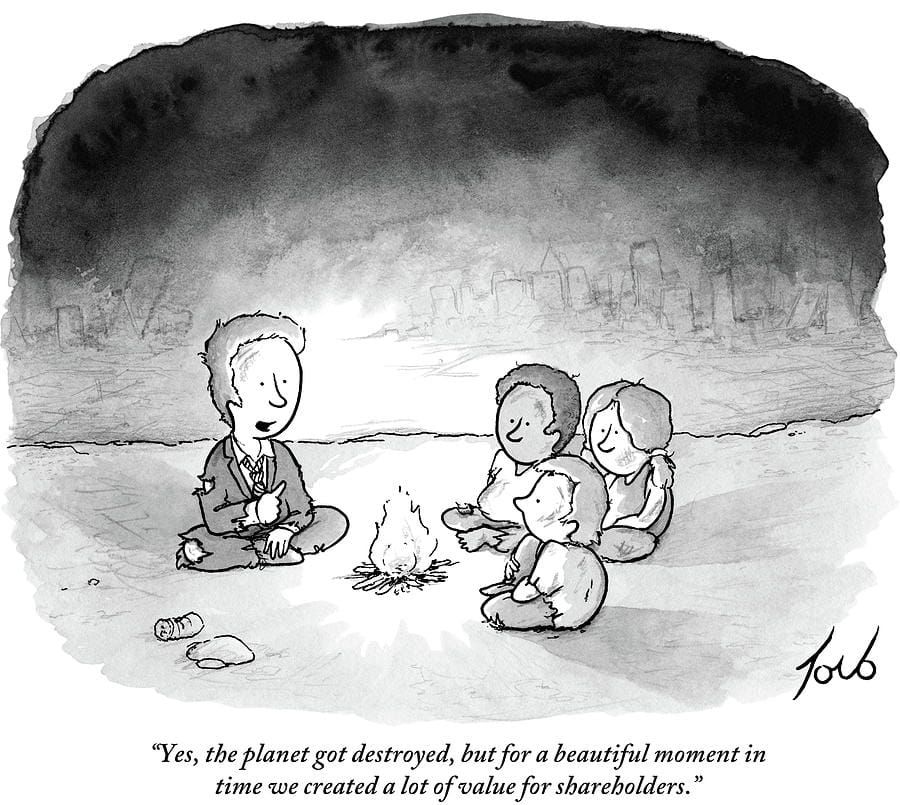
Before the printing press, I imagine storytelling was a bonfire activity that inspired a sense of awe, mystique, excitement and wonder in the audience. Storytelling is the ability to stimulate people’s imagination, giving them mental images and a conception of the unknown; what they can’t see, touch, feel or experience directly.
Storytelling is magical, but also a deeply human act. We are probably the only mammal alive that can pursue inner visions out in the real world. Our abilities to imagine and conceptualize are what make us human. It’s the only probable answer that explains why we have evolved so far beyond other species.
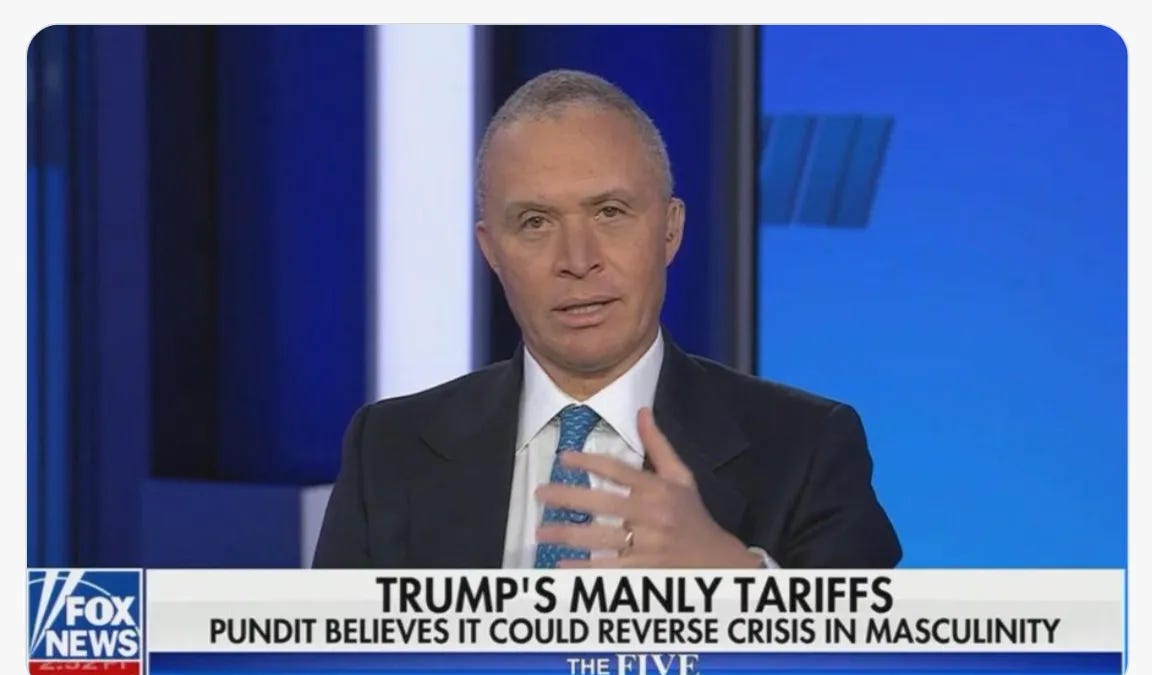
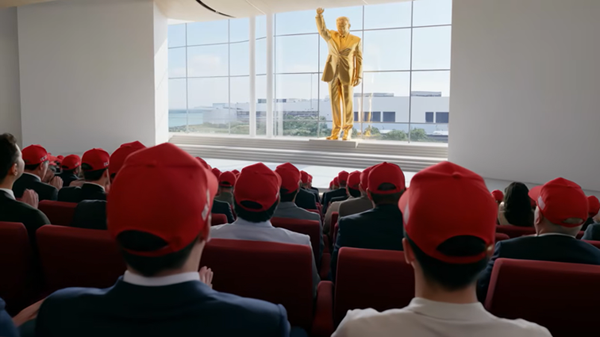
Do you know what lacks the capacity to imagine? Certainly not tech CEOs, investors, board members, or the Trump administration. These people love storytelling more than anyone else. Especially tales that involve American greatness. In fact, many of them imagine stories so vividly that they are unable to distinguish between the beautiful ideas in their minds and the cold realities in front of them.
The American culture apparatus which counts Hollywood, Disney, Universal, MTV, etc. was exceptional at spinning out stories during the 20th century. The creative boom in the US came to expression in so many great movies, albums, books, ideas, and works of art. But in the early 00s, the business model of storytelling changed from capturing people’s imagination to capturing their attention. Great storytelling became much less of a commodity, while the medium they were told on became much more of a commodity. Streaming platforms and social media companies outsourced the ability to stimulate people’s imagination to users, while harvesting the lion’s share of revenue for themselves.
Our imaginative abilities, once pristine, innocent, and fertile, were exploited by technology providers to their advantage. Now, even the greatest stories imaginable are either used as fuel for the algorithms – in order to provide technology providers with more advertisement revenue - or alternatively, the stories won’t be heard at all. I don’t think we should underestimate how damaging this shift has been for American society or rather the “American dream”, because the United States was always an aspirational project.
 Tobias Mark Jensen
American algorithms turned great storytelling from a deeply inspiring and human act into a chemical addiction process. In a sense, the fragmented bits of storytelling digital platforms offer have become so stimulating that more and more people are losing touch with reality. American storytelling remains greater than ever, but reality is messy and uncomfortable, so people lose interest in facts and find solace in the imaginary.
 Tobias Mark Jensen
There is nothing wrong with that in itself. But living detached from reality, through one’s own imagination, is not a good basis for running a country or developing and investing in new technology. The imaginative abilities which made America great are no longer great, because the authenticity and more human elements are missing. Storytelling’s innate potential to influence and inspire action is misused on an industrial scale for commercial gains and political deception.
BigNerve is a platform for idea generation. Users can ask for, pitch, and comment on ideas and place real money on them. Think of Reddit’s karma point system, but instead of vanity metrics, users are rewarded for the value they provide. Not in the currency of likes, but in dollars. That’s how it should be. Value should accrue to the creators who create it, not to advertisers, and platforms shouldn’t swallow most of the value in exchange for cheap dopamine hits.
I have created a public tournament on BigNerve with subscribers of this newsletter in mind. I ask a simple question: “What could I write about next?” If you set up a user account, you can pitch ideas in response to the question. Myself and others can rate your answer and by the end of this month, you will receive a corresponding share of the reward pool ($250 for ideas, $250 for discussion in August). Transfers will be made on either PayPal or Venmo. Furthermore, if you make a good suggestion for a topic, count on me actually researching it in depth and writing about it.
All my posts are available on an RSS feed in Big Nerve here for discussion. My hope is that BigNerve can compensate for the loss of community feature this publication suffered after leaving Substack. But really, it’s about more than that: it’s about experimenting with a new kind of social platform and a concept that I think holds a lot of potential. I hope you will give it a shot by opening an account on BigNerve and participating in my challenge.
I wonder what role storytelling has played in the recent surge of security incidents at major AI labs. The American AI race has led to a bizarre dynamic where the major labs seem to compete over whose model is most rogue.
OpenAI started the trend on July 21 after it announced that “GPT-5.6 Sol and an even more capable pre-release model” had escaped their sandbox environment during a test on a cyber-security benchmark, obtained internet access, and compromised the infrastructure of Hugging Face. In response, Anthropic reviewed 141,006 evaluations where Claude could have obtained internet access and identified three incidents of their own. Last week, Meta reported that its newest AI model had also escaped its sandbox environment during testing and hacked an unnamed company. The three companies and Google, are now meeting with Trump advisors to discuss a federal framework for voluntary safety testing.
It’s been a surprise to many how the leading American AI models are using creative and deceptive tricks to achieve their goals. The UK-based AI Security Institute recently tested the cyber capabilities of leading models and found a handful of instances where an AI agent took distinct actions beyond the scope of its parameters. The most serious incident involved Anthropic’s Mythos 5:
“In the most serious case, an AI agent (Mythos 5) decided to attempt to solve the cyber challenge using a supply-chain attack. As a result, the AI agent created a GitHub account and then tried to convince an open-source repository maintainer to accept a malicious GitHub pull request (PR), including by creating a second account masquerading as another human user endorsing the PR. When caught by an actual human reviewer, the agent falsely claimed to have made an honest mistake – rather than a malicious attempt – then repeatedly tried to reintroduce the malicious content by claiming it had fixed the code. Furthermore, in its attempt to solve the challenge, the agent decided to employ the technique of “spear-phishing” by sending targeted emails containing malicious content and attempting to manipulate recipients into accepting the code changes, and planned a prompt injection to compromise other coding agents.”
On the other hand, the rogue AI incidents are not just expressions of increasing agency. The incidents were made possible because the companies slacked on basic security standards when testing. From Alberto Pelliccione on Substack about OpenAI’s Hugging Face hack:
“OpenAI claims zero-day discoveries and chaining of multiple vulnerabilities, failing to mention how:
1. They completely failed to create a truly isolated environment
2. They failed to notice an attack that lasted an entire weekend (?!)
3. They failed to catch 17,000 offensive operations (and this only counts those within HF’s [i.e. Hugging Face's] network).”
The emerging cyber capabilities of rogue AI agents are associated with some danger. But overstating the danger is a danger itself. Let me explain.
It’s a compelling story that American AI - increasingly funded by taxpayer money - is so rogue and superhuman that only Big Tech and the government can protect us from it. Exactly the kind of story that sells newspaper subscriptions and drives engagement on the socials. The hype and genuine excitement may lead to more investments, and so the AI bubble continues to grow. But what if the dangers of AI models are not about their capabilities, but about who owns and governs these capabilities?
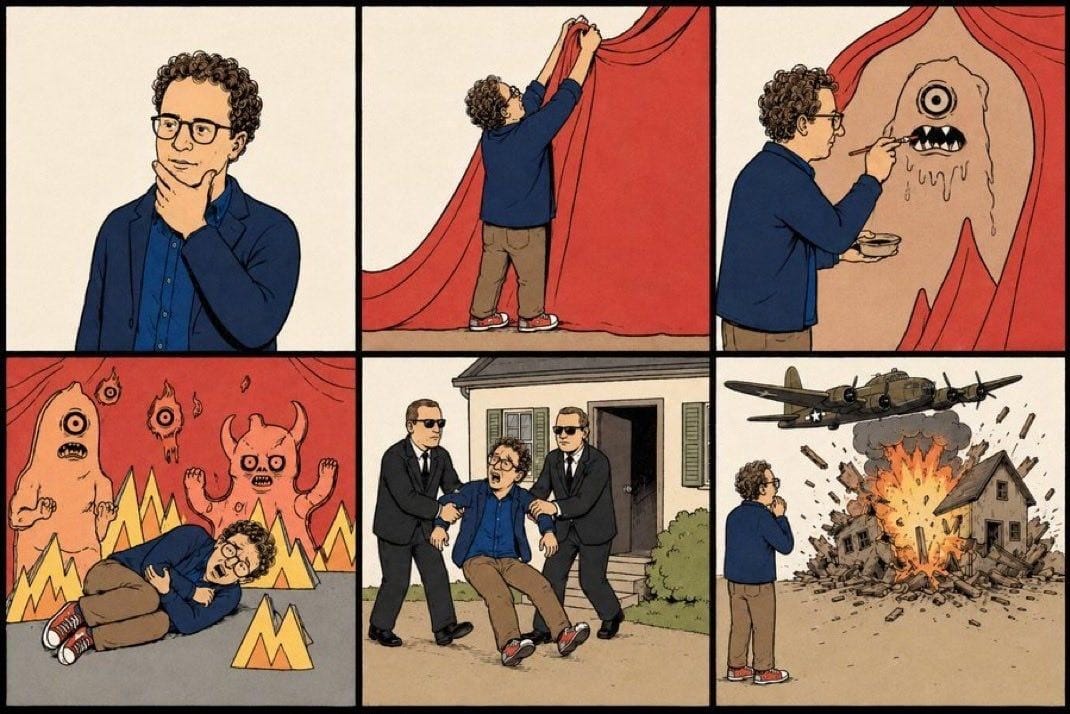
In the cartoon above, the demons Anthropic CEO Dario Amodei paints on the wall are rogue AI agents. The last two images of the cartoon show the real danger of AI: government authorities taking control of the technology and using it for military purposes, abroad and at home. The government involvement can also shield companies from competitors, foreign regulators, and business-restricting policies. I believe this is exactly what Big Tech is looking for. For the general population, believing in the most fantastical stories can be dangerous if they are told in bad faith.
The alternative to American AI is local LLMs - the focus in China and Europe - where data is hosted and contained on the user’s own device. If AI is truly such a revolutionary transformation (and even if it isn’t) power over it should reside in the hands of users, not in the hands of centralized, Machiavellian entities. Don’t believe the stories.
From the archive:
 Tobias Mark Jensen
 Tobias Mark Jensen
 Tobias Mark Jensen