Tech Legal Brief #19 - Reforming Section 230 & AG Opinion on AI and Copyright

Introduction
The limits of Section 230 in US law need to be more firmly established by legislators. That is why we need a reform of Section 230. Not to override the underlying principle of publisher immunity, but to ensure that Section 230 is not used as an accountability sink for Big Tech companies. In particular, I argue in this Brief that Section 230 should not apply when online platforms distribute content to users via recommendation algorithms with invisible parameters applied for the sole purpose of optimizing view time.
In connection with Section 230, we will also discuss the EU Commission’s preliminary finding that TikTok is in non-compliance with the Digital Services Act, as it fails to take the so-called “rabbit hole effect” into account. The rabbit hole effect refers to the situation where young or vulnerable users are trapped in a loop of negative content distributed to them by the algorithm (on TikTok). I have covered this concept in depth in my book and previously on Substack.
We will devote the most space to Advocate General Szpunar’s Opinion on Case C‑250/25 Like Company v Google Ireland Limited. It’s a very long Opinion, sitting at 240 paragraphs, and insightful, essential reading for copyright nerds. Here, I will only summarize what I perceive as the most important points and provide commentary in a way that should be accessible to most, if not all, readers.
Even though Section 230 and the copyright debate seem remote, there is at least one touching point which AG Szpunar’s Opinion addresses: are users or AI providers responsible for AI-generated output? That question is obviously important in copyright law - when AI models generate copyright-infringing output - but it also finds relevance in Section 230 - do AI companies enjoy publisher immunity when their AI models generate illegal content? The common question is: When are tech companies subject to liability for content on the platforms they host for users?
As far as AI models go, I have argued for a long time that users will typically be held responsible for AI-generated outputs (recommended reading for paid subscribers):
 Tobias Mark Jensen

Advocate General Szpunar arrives at the same conclusion. For more information on the facts and legal issues of Case C‑250/25 Like Company v Google, see this edition of Tech Legal Brief:
 Tobias Mark Jensen
Finally, we will look at some links to other interesting stories.
Reforming Section 230
Cory Doctorow, a tech critic I have great admiration for, thinks that reforming Section 230 would cause Facebook to own the internet forever. I just don’t see it. There must be a way of reforming Section 230 so tech companies can be held liable for promoting certain kinds of content via their algorithms (namely when they push young or vulnerable users down so-called “rabbit holes”) and forcing them to fix AI models that routinely generate harmful or wrong output, while at the same time not placing a burden on online platforms to monitor each and every post. Such a reform is most definitely in the public’s best interest.
Section 230 was famously described by law scholar Jeff Kosseff as the twenty-six words that created the internet. Specifically, “Section 230” is often used as a colloquial term for 230 (c)(1) of the Communications Decency Act of 1996, which states the following: “No provider or user of an interactive computer service shall be treated as the publisher or speaker of any information provided by another information content provider.” Essentially, this principle means that in the eyes of the law, online platforms hosting third-party content are not treated as the speakers of it. Otherwise, online platforms like Facebook or Reddit could be sued each time a user posted something another user was offended by, and especially in a litigious country such as the US, that would be fatal. There are five exceptions to the publisher immunity principle which are listed in Section 230 (e) (1)-(5) and tend to be interpreted narrowly: (1) the enforcement of federal criminal law, (2) copyright infringements, and in accordance with (3) state laws (that are consistent with s. 230 (c)(1)), (4) privacy laws, and (5) sex trafficking laws.
All of this makes sense. In practice, however, courts have been willing to stretch the publisher immunity in Section 230 (c)(1) very far, to a point where the provision can work as an accountability sink for Big Tech, whatever the charges against them may be. Tech giants are just neutral hosting providers of information, the thinking goes, don’t ever blame them for the evil stuff users are posting.
 Tobias Mark Jensen
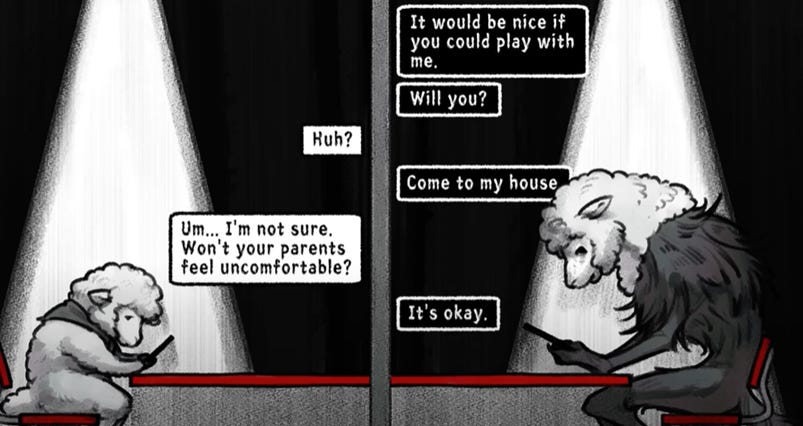
In recent years, however, cracks have started to show in Big Tech-attorneys' beloved go-to-defense, following landmark decisions in New Mexico and California.
 Tobias Mark Jensen

Doctorow’s main defense of Section 230 is that only the largest online platforms, e.g. Facebook, Instagram, X, YouTube, and LinkedIn, can afford to fulfill a general obligation to monitor their services and remove infringing third-party speech. Small, independent online communities or emerging competitors like Bluesky or Mastodon, on the other hand, will suffer without the protection of Section 230, and likely go bankrupt due to litigation fees.
That may be accurate, again, especially in the US, which is a litigious country in a league of its own. Removing the publisher liability shield for online platforms, so they could be sued each time a user feels bad in their tummy, would be an intolerable situation, obviously. But it’s equally obvious that the internet has evolved a lot since Section 230 (c)(1) was adopted thirty years ago. The main shift is that the internet has changed character from being a public good to a private asset controlled by a cartel of American tech companies. Information on the internet is not primarily moderated by volunteers on niche messaging boards, but automatically distributed by recommendation algorithms on an unfathomable scale. The internet has changed a lot since 1996, and so should the laws that regulate it.