A Small Policy Change Could Break Meta’s Monopoly in the EU

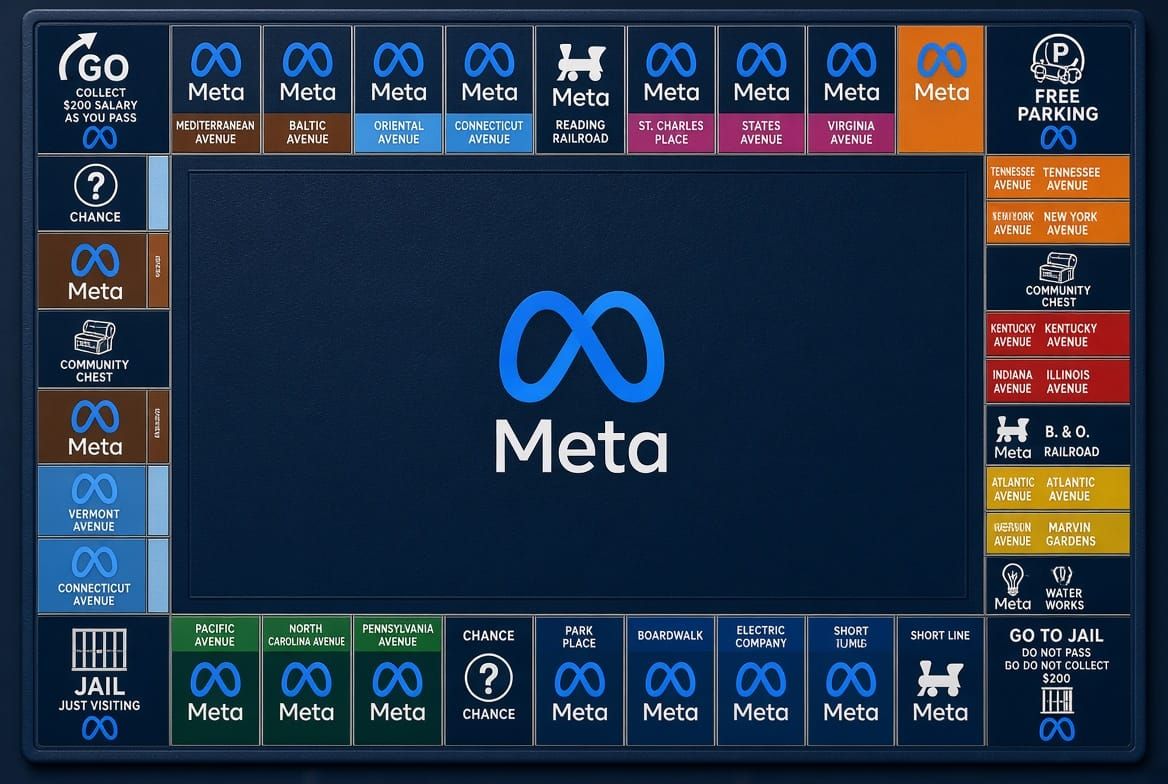
Meta doesn’t hold a dominant market position in Europe, or elsewhere, because it’s the world’s best social media company. Meta dominates because it holds a monopoly – whether recognized by the law or not.
Facebook was the first social media platform people started using en masse 20+ years ago and the network effect has worked in its favor ever since. A simple truth that applies to the social media industry: the majority wants to be where the majority already is. And since the majority is on Facebook and Instagram, that’s where people stay.
At the moment, many local companies around the world are trying to challenge Meta’s monopoly by promising more ethical, privacy-friendly versions of social media, often for native citizens of different countries. But, at best, these startups win a moral victory. Where people are, people go, and since Facebook and Instagram have dominated social media for more than a decade, the majority of their users aren’t going anywhere.
Those entrepreneurs who think they can make average users migrate away from Meta’s services in droves are in my view engaging in wishful thinking. All the ethical arguments for leaving Meta are just not appealing enough when so many of people’s loved ones are already on the platforms, and the recommendation algorithm knows what they want to see next. Telling people to leave Facebook is like telling drug addicts that drugs are unethical and dangerous and they should exchange them for a healthy diet. But why is it that such a large part of the population has apparently fallen in love with their cage and refuse to leave?
One explanation is that in most developed countries there isn’t a strong sense of community, culture, religion, or any binding elements that create coherence across layers and factions of society. The early social media platforms helped to fill that void. Daily life is boring and routinely by default, but Facebook and Instagram feed us with the welcome illusion that our social lives can be ordered and structured in a neat way and played like game. The dopamine hits that come from “connecting” with people are an enticing offer in an age where so many of us long for a genuine connection with something or someone, but can’t find it.
Yet, “connecting” people is not the business model of Facebook and Instagram. Modern social media platforms are primarily entertainment engines that help us to momentarily escape from the headaches of daily life, and in a deeper sense, dealing with existential angst over the fragility and impermanence of life. As with other forms of substance abuse, social media gradually begins to consume us, rather than vice versa, and draws us further away from our natural state as human, and towards a chemically altered state with constant stimuli and distraction.
However, the EU envisages social media differently than I do. Not as dopamine machines that streamline our thinking, while distracting and desensitizing us from reality, but as safe, open, democratic, and transparent digital platforms that should support civic discourse, media pluralism, and freedom of expression. Article 17 of the proposed Digital Fairness Act would obligate “traders” of digital products to give consumers easy and effective tools to disable addictive features that are either intended or “can reasonably be foreseen to encourage compulsive or excessive use”. Article 10 contains a prohibition of implementing so-called “dark patterns” in online user interfaces that could manipulate or deceive consumers.
Here is what remains unsaid: the primary targets of the Digital Fairness Act, like the Digital Services Act and the Digital Markets Act, are American platforms. Meta’s business model is based on addictive features and dark patterns. So, the EU wants Meta to reform its entertainment engines to European ethics, while no viable European alternatives exist. Ideally, the positive vision that EU lawmakers hold of social media (as democratic spaces etc., without addictive features or dark patterns) should be fulfilled by European companies who share the same beliefs and values. Not by Meta. It’s kind of like dating a psychopath and hoping they will take part in one’s idealized vision of what a relationship should be like. It will never work.
This leads us to two questions: Why can Europe not develop social media companies that can rival Facebook and Instagram? And how can it?
We have already answered the first question: where people are, people go. The second question also has a clear answer with a straightforward solution.