The Infinite Donut Machine


Two weeks ago, I invited members to participate in my BigNerve challenge where they can (still) suggest ideas for new posts. So far, I have received three really good suggestions:
- The deviousness of infinite scroll
- Overview of different state laws on AI/AI data centers
- The right to deal with a human
I plan to tackle each of these topics in the coming weeks. Today, it will be the deviousness of the infinite scroll which kind of resembles the infinite donut machine depicted in the post image. Instead of being punished with pain, Homer is punished with pleasure; getting what he most likes over and over again, forever. Social media algorithms work in a substantially similar way; rewarding users with pleasure and entrapping them like slow-boiling frogs, until they can’t muster the willpower to escape from the platform.
As you read, please imagine that you are the CEO of a big social media company. Imagine that you are Mark Zuckerberg, CEO and majority vote shareholder of Meta, which in practice means that you are the king, the one-ruler, of Facebook and Instagram. Ask yourself: why would I not give users the option to opt-out of algorithmic recommendation, slow down their feeds, put voluntary time limits on their feeds, give users more control over which types and genres of videos they are exposed to, or implement responsible safeguards for children?
I have thought about that question for some time. My honest answer is that a person must be a narcissistic psychopath to not give users these options in the face of expert recommendations and tremendous public, political, and regulatory pressure to do so. I will elaborate on that essential point towards the end of this post. If it’s even directionally true that addictive tech platforms are governed by people who fundamentally care more about business growth than how their platforms make users feel that changes how digital law-making should be approached.
The soft, non-confrontational approach the EU has adopted with the GDPR, AI Act, and DSA emphasizes self-assessments, formal documentation, and fines measured in single digits of annual turnover. All the compliance paperwork is annoying, but manageable for Big Tech companies - less so for startups – and not sufficient to protect consumers against a company that doesn’t care for the wellbeing of its consumers. The Trump regime refers to the EU Commission’s fines as a form of taxation – implicitly, the price of doing business in Europe. Evidently, the load of compliance paperwork and the disputed fines have not prompted social media companies to overhaul the design of their addictive platforms.
The EU Commission concluded in July 2026 after a two-year-long investigation that Meta failed to account for the risks to children associated with Facebook and Instagram and didn’t implement the necessary mitigation measures. TikTok received a similar warning from the EU Commission in February 2026. I have expressed concerns before about the ability of the Digital Services Act to protect children. The DSA approach is too slow, costly, bureaucratic, and respectful towards the tech platforms that want to addict children. So far, the DSA has mainly served to improve the lives of lawyers and bureaucrats who get paid, not children, EU consumers, and certainly not businesses anywhere.
 Tobias Mark Jensen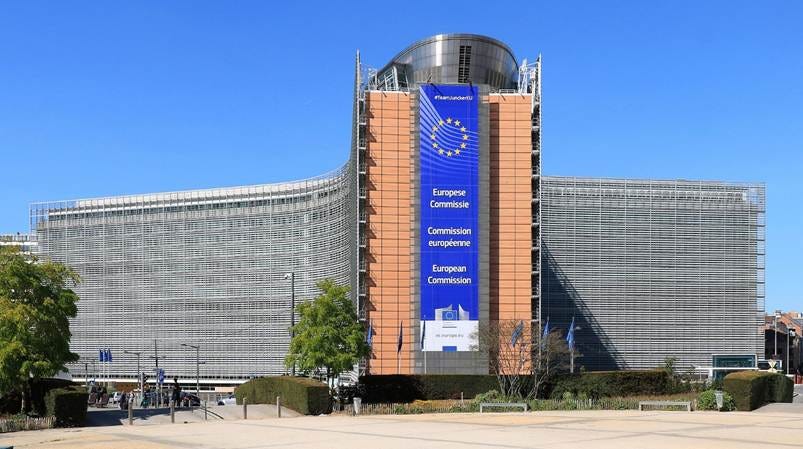
If there is one group of people who are more concerned about social media’s impacts on children than EU bureaucrats, it’s the American tech executives who are responsible for building addictive digital platforms. But that is only when it comes to their own children, not to others. Zuckerberg has said that he doesn’t want his children to sit passively “and go from video to video”, while Peter Thiel limits his children’s screen time to 1.5 hours screen time a week (not a day).
The law is finally starting to catch up with Zuckerberg’s ad surveillance empire at a state-level in the US. The state attorneys general in California, Colorado, Kentucky and New Jersey understand what’s at stake. The four states are collectively seeking up to $1.4 trillion in penalties from Meta over accusations the company designed Facebook and Instagram to addict young users and misled the public about their safety. But even that is not enough. The four states want Meta to overhaul Facebook and Instagram by eliminating the infinite scroll, likes, and setting time limits for users under 18, and enforcing restrictions to keep children under 13 offline.
Earlier this month, a court in New Mexico ordered Meta to pay $567 million to a public fund for its failure to warn the public about dangers its platforms posed to children. The judge overseeing the case compared Meta to a “public nuisance” akin to air pollution. In addition, Meta was ordered to remove like counts, implement usage limits and ban push notifications during school hours for children. The $567 million fine comes on top of another fine of $375 million, Meta was already ordered to pay in the same case, for a total of $942 million.
 Tobias Mark Jensen
Meta has unsurprisingly announced it will appeal the court’s decision. Many more trials concerning Meta’s negligence of child safety are to come. The biggest social media trial to date is currently ongoing in California between Meta and the coalition of state attorneys general which comprises 29 states led by California, Colorado, Kentucky and New Jersey.
 Tobias Mark Jensen
Besides the crushing penalties Meta will face if it loses in court, all the company’s business-defining engagement hacking features on Facebook and Instagram will have to be eliminated for children, including the infinite scroll. In conjunction with personalized algorithmic recommendation, autoplay, and reactions and reshares which rapidly distributes the most emotionally captivating content, the infinite scrolling feed is the very foundation for social media’s commercial success.
Aza Raskin, who designed and introduced infinite scrolling to the world in 2006, has publicly regretted it. In a TED podcast from May 2024, Raskin says the following:
“I was blind to the way that my invention created with positive intent was going to be picked up by perverse incentives of what would later become social media where it wasn't to help you but to essentially to hunt you, right? To extract something from you using an asymmetric knowledge about how the human mind works, which is that your brain doesn't wake up to ask, “Do I want to continue?” Unless it gets something like a stopping cue. (..) So, my invention got sort of sucked up by a machine and wastes on the order of a hundred thousand human lifetimes per day now it's, it's horrendous. (..)
It's a business model that is fundamentally about getting reactions from the human nervous system. You get people angry. You show them things that they cannot help but look at, so you addict them. If the incentive is to get reaction and make reactive the human nervous system, it's sort of obvious that we're gonna get polarization, narcissism, more outrage, eventually democratic backsliding, like that's all a predictable outcome of just make the human nervous system more reactive and get reactions from it."
To me, it’s sort of obvious too, but conclusive evidence from research is missing which means that politicians are left with a thin foundation for regulating digital technologies. Especially, since there is a loud minority which insists that “correlation does not imply causation”- that social media may correlate, but does not necessarily cause negative mental health outcomes - even in the face of mounting evidence to the contrary.
For example, a meta-study published in March 2026 combines self-assessments from a sample of 96,676 participants across 58 studies and finds there are “no significant correlations between short-form video use and positive psychological states, but significant positive correlations with negative psychological states, including depression, anxiety, stress, negative affect, loneliness, and boredom.” Yet, a skeptical reader can still claim that the correlation does not objectively prove that short-form video usage is the cause of a negative psychological state. The users could feel bad for other reasons that are not related to short-form videos at all.
Even if there was conclusive evidence that engagement hacking features such as the infinite scrolling feed cause negative mental health outcomes for users over time, political initiatives to do something about it would very likely remain contested. Just think of how much resistance there still is to the green energy transition, despite the rock solid scientific evidence that excessive consumption of fossil fuel-based energy undermines the conditions for living on earth. At the current moment, humanity’s best shot at preventing the next generation of adults from wasting 25 years of their lives away on phones with adverse mental health outcomes, may be the ongoing social media trial in California, and upcoming trials in other US states.
Returning to my questions from the introduction section:
Why would anyone deliberately design social media to be hyper-addictive when the damaging effects on users and society at large are well-documented?
I think it’s due to a combination of greed and sexual perversion which characterizes most white-collar crimes.
In contrast, the root of most blue collar crimes is survival needs. Thieves steal bread to feed their families or physically attack someone who threaten their fragile sense of identity. Perpetrators of blue-collar crimes can often experience complex moral quarrels associated with their crimes like the protagonist in Dostoevsky’s Crime and Punishment. Our justice systems in liberal society tend to punish blue-collar crimes harshly.
White-collar crimes, on the other hand, are based on free will rather than a survival need. They are motivated by material greed, to become more than others, and/or the desire to dominate and control others, which is sexual in nature. Jason Parham wrote a good, provocative story for WIRED about a genre of MAGA-coded gay porn playing on ICE raids and detentions that is quickly gaining popularity on X. It’s not coincidental that the MAGA administration liberates members of the Epstein class and financial fraudsters from legal accountability, while punishing and attacking migrant workers, receivers of food stamps, children from broken homes, those who struggle to pay for a health insurance, and oil-rich but politically broken countries such as Venezuela and Iran. Greed is definitely part of the explanation, but there is a kind of sexual perversion behind the performative cruelty as well.
The best pressure testing of any justice system or a political system is to see how well it responds to the whims and kinks of the rich. If it can’t curtail them, well, then there is no genuine rule of law or democracy. Just words, formalistic rituals, and meaningless children’s games that the poor and desperate are forced to participate in, so a privileged group in golden animal masks can observe with pleasure and bet on the outcomes from a safe distance.
When I think of social engineering features such as the infinite scroll my thoughts go towards white collar crime and my thoughts go toward the public’s failure, if not legal, then moral failure, to curtail the whims and kinks of the rich. Infinite scrolling feeds are an essential feature of the social media platforms that are designed to be more addictive than slot machines. The owners of infinite scrolling feeds have a financial incentive to throw as much advertisement as possible on users without making them look away. But there must also be a pleasure involved in entrapping, dominating and controlling the attention and lives of so many people. The same kind of pleasure Elon felt when he announced he was spending a weekend feeding the USAID into the woodchipper instead of going to cool parties or the look of hunger in Sam’s or Dario’s eyes when they talk about the singularity or AI-driven worker displacement.
EU regulators and sane state regulators in the US sometimes make the mistake of assuming that Big Tech companies and tech billionaires are honest actors who deep down in their hearts want to do what is best for the public and for humanity. But we have to open ourselves up to the possibility that we are in fact dealing with dishonest actors who are horny for power and control, sick with greed, and want to do everything they can to protect themselves, their friends, and family while the world burns to ashes - metaphorically or otherwise - and they escape to build a new civilization on Mars. If that is directionally true, we should ask harder questions and think much more critically about the digital technology we use every day.
Further reading:
 Tobias Mark Jensen
 Tobias Mark Jensen
 Tobias Mark Jensen