The Unholy Alliance on the Bubble to Burst Them All


Anthropic’s filing for its upcoming IPO - which will most likely happen in November after the midterms - was leaked to Reuters. The numbers are… interesting. Anthropic made $4.6 billion in 2025 with over a billion of that coming from just two customers: Google and Amazon. These two companies are also its biggest investors and primary compute suppliers. During 2025, Anthropic spent $7.33 billion on compute and infrastructure and posted a net operating loss of $42 billion.
Anthropic boasted earlier in the year that it had a run rate for July (revenue of one month multiplied by 12) of $65 billion. However, per Irrational Analysis (via Ed Zitron) that number may have been calculated in the most cunning way possible; by using revenue for a single day - July 31, 2026 - which was $178 million, multiplying it by 28 (days) and again by 13 to account for the full year. The public (remarkably!) has no access to information about how Anthropic’s run rate was calculated, so there is currently no way of knowing.
What we do know from Anthropic’s leaked IPO filing is that the company plans to spend $518 billion on cloud, computing and infrastructure obligations in the coming years, of which approximately 80% is non-cancellable. At the same time, the public sale of Anthropic could value the company at more than $2 trillion. Anthropic’s IPO would be the largest ever, perhaps larger than the 10 largest tech IPOs combined, with guarantee if discounting SpaceX.
Sources told Reuters that Anthropic projects revenue between $190-200 billion by 2028. Even though the company writes in its leaked IPO filing that “AI will transform the global economy more profoundly than industrialization, electricity and the internet” reaching its aggressive growth targets faces challenges.
The first challenge I can think of is competition. As we know, Anthropic’s competitor SpaceX IPO’ed in June and raised a record-breaking $70 billion, valuing the company at $1.77 trillion. SpaceX sees its total addressable market (TAM) spanning $28.5 trillion, primarily because of the market opportunities of xAI. Anthropic’s closest competitor OpenAI delayed its IPO to 2027, but it’s currently trying to raise another $30 billion in funding for a $1.4 trillion valuation. Other established players like Google and Meta demand their share of the AI market too. However, the most existential competitive challenge comes from China’s open-weight models. Chinese models such as Qwen, DeepSeek, Kimi, GLM, MiMo and MiniMax are increasingly competitive with American AI, but they generally are lot cheaper, and users can download and run them locally, instead of sharing valuable data through the American companies’ websites, APIs, and cloud servers.
A second challenge is that the timing of Anthropic’s IPO sits awkwardly in the aftermath of CEO Dario Amodei’s recent call to “pace the frontier”. There appears to be a major conflict between Anthropic’s deep-seated fears about the technology it’s creating and its willingness to accept record-breaking funding from the public. Building AI safely means building it slowly, which means not going through an IPO right now. I don’t see the justification for any other conclusion, assuming that Anthropic’s safety concerns are genuine. Why would Anthropic offer shares to the public, while spending 80 of 261 pages of its IPO filing laying out risk factors of its business, including that it creates self-preserving, deceiving, and manipulative AI that resist shutdown and could pose a "catastrophic or existential risks to humanity”?
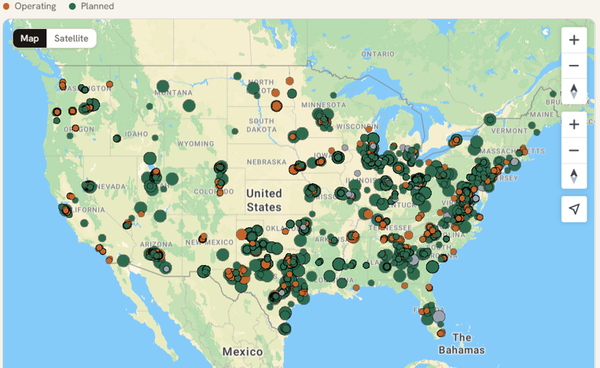
A third challenge is that Americans really, really hate AI. It’s not just data centers. AI models claim more jobs than they create and it’s already harder for newer graduates to find work. The general public is understandably concerned about the serious warnings from industry insiders and the many incidents of rogue AI agents committing cybercrimes without liability. Then, the massive, trillion-dollar capital expenditures by hyperscalers play an important role in higher interest rates and leave behind gigantic data centers no one wants to look at or live next to. The data centers are housing extremely expensive computing equipment that stops working after a few years and quickly gets outdated. It's piles of money piling on top of other piles of money and oligarchs are those who see the benefits.
The fourth challenge is even more existential to the industry. Big Tech built their empires during a time of relative peace and stability in the world. Now, the US is at war and geopolitical conditions are much shakier. Trump’s military venture in Iran is leading the world towards a prolonged energy crisis. Even if Americans are not yet receiving draft letters in bulk, the effects of the war will be felt for a long time to come. The stock market continues to flirt with all-time highs, but the underlying global conditions that sustained its foundation and growth are no longer present. Although Big Tech had a hypergrowth period during COVID-19 and have weathered many storms over the last many years while always coming out stronger and defying skeptics, it would be foolish to treat the companies as insulated from global economic conditions. AI is the most capital-intensive industry in history and generates uncertain returns against fanatic infrastructure buildouts, VC investments, and training runs. Given that, the industry must be more sensitive than we like to admit to rising interest rates, high inflation, unemployment numbers, consumer spending, and economic shocks caused by war and climate-related disasters.
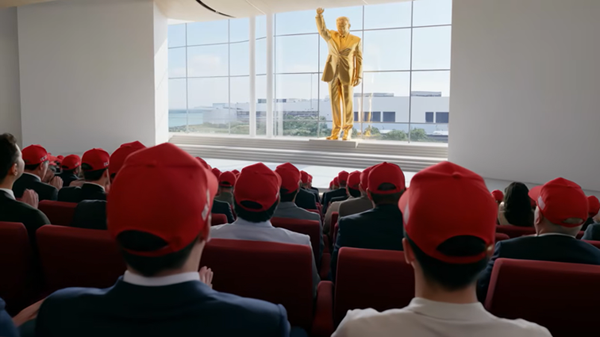
Call me a pessimist, but I just don’t see a positive outcome for American AI. The circular financing scheme that sustains the AI bubble resembles the circle of trusted yes-men advisors who validate Trump in his daily delusions. The narcissistic personality disorder Trump suffers from protects him from the feelings of shame normal people are held back by, but it matches the megalomania of famous Silicon Valley egos. American AI has found a home in Trump’s presidency and he has adopted the companies like a loving stepfather.