The Existential Threat to the West Is Our Own Cowardice

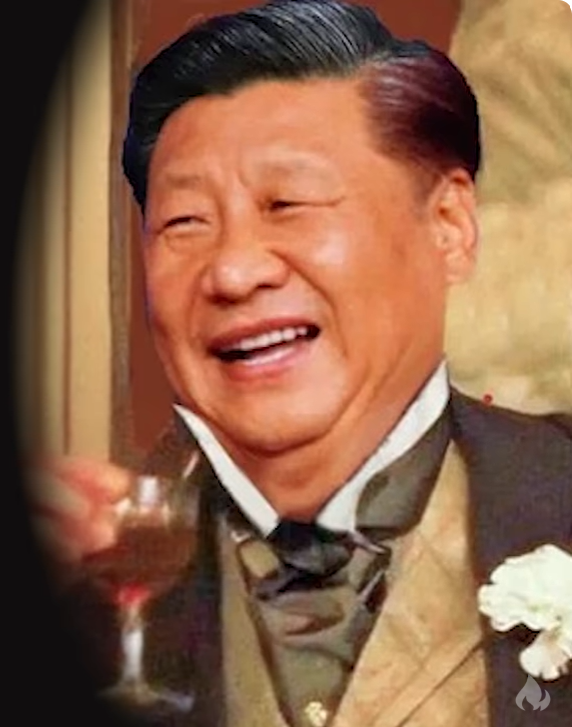
The West is under an existential threat at the moment. But it’s not climate change, AI, the far-right, wars or pandemics. The threat is our own cowardice. The enlightenment ideas of democratic governance and human rights cannot be sustained, if we are too afraid or just indifferent to enforcing them. The US and the EU are facing slightly different threats in this regard and it’s worth being precise about what they are.
The US
Three weeks ago, Trump gave a rambling speech to the UN General Assembly where he boasted about fictitious achievements, urged other countries to resign from the “rogue” and “evil” International Criminal Court, railed at the globalist scheme to control AI, global carbon taxes, the persecution of Christians through mass-migration, etc. Iranian and Cuban delegates walked out as Trump asked the attendants if he should “annihilate” the Islamic Republic and called the Cuban “regime” a “failed state”, but otherwise his speech was met with polite applause and possibly a few eyerolls among the audience.
Trump’s 2025 UN speech was even more bizarre. Here, he went on a long rant about climate change being a hoax and ridiculed Europe for reducing its carbon footprint by 37%. Many must have wondered: How can an 80-year-old reality TV star and failed real estate mogul, unemployable for any other role, end up in a position where he gets to speak his declining mind to world leaders at the UN as President of the US? That’s not normal.
But Trump has created a new norm, because so few dare to cross him. It would be refreshing to see the head of some state call Trump what he is: a corrupt liar who has betrayed his country and its allies. Many are thinking it, but it would break with the unwritten rules of politics to say it out loud or even hint at the truth in an indiscreet way. For example, in Ursula von der Leyen’s recent State of the Union Speech, she went out of her way to not mention Trump or the US directly or make any gesture at criticism of Trump. If she did, of course, von der Leyen would run the risk of sawing off the branch the EU is sitting on. In politics, it may be a smart move to always be respectful towards those who are more powerful than you. Trump doesn’t play the game of politics though.
He recently told a journalist before boarding his private jet that the ultimate intervention to protect the US bond market is the military. Instead of asking what he meant by that, the journalist brushed it over, perhaps afraid of being called a piggy. In general, asking confrontational questions to people who hold more power than you do is nerve-wrecking, since it breaks with social stigma and unspoken hierarchies. And that is why, Trump.
Or think of Trump’s television debate with Kamala Harris where he made the objectively funny remark with reference to Haitian immigrants: “In Springfield, Ohio, they are eating the cats. They are eating the dogs.” Harris laughed at him with a bewildered, slightly condescending look. But why didn’t she say: “That was a lie, you are lying”. How many political opponents have called Trump a liar to his face, which he is? As far as I have seen, only Joe Biden in a TV debate before the 2020 Presidential election.
As Giuliano da Empoli writes in The Hour of the Predator, the Democrats are a party of lawyers. But not a rare breed of lawyers who would take a bullet or spend years in prison to protect constitutional right. Democrats are, like Kamala Harris, career opportunists who have figured out the game of politics, but don’t have an answer to apolitical opponents who communicate in the language of propaganda. Not besides eternal throat-clearing. And again, that is why, Trump.
We have human rights, but not if we don’t dare to stand up for them. Then, we lose them. That was one of the lessons we learned from Hannah Arendt and her concept “the banality of evil”. Hitler’s takeover of Germany leading up to WW2 was not enabled by angry, sadistic soldiers who invaded houses and scared the shit out of those who refused to comply with the new government demands. Fascism was in the first place enabled by boring state officials who were just pushing papers around and signing documents without looking up. Or later, by the drivers, train conductors, and security officials who escorted Jews to concentration camps. “It’s none of my business what happens to them” they might say if interviewed.” The pay is good and if I don’t do the job, someone else will”. First they came for the communists etc.
As a population, I don't see that Americans are much better at standing up to those in power and invoking their rights, because money and influence is culturally held in such high regard. Some Americans are too afraid of the consequences of speaking out, while others just don’t care enough to speak out. Of course, there are important exceptions. But overall, most mainstream media outlets, public institutions, universities, law firms, major companies, public intellectuals and academics prefer to stay silent and quietly adapt to a new system run by Trump and his tech oligarchs, rather than risking their hard-earned reputation and comfortable lifestyle by speaking truth to power. Sure, many speak out on social media platforms where the stakes are extremely low. But if they are poked a bit on the stomach and sense the slightest danger, they tend to fold their cards quickly like a bad hand in poker.
A very basic example to illustrate. Trump’s outrageous demand that everyone uses the term “Super Intelligence” instead of AI, or else they will be considered an “ENEMY” of the state. Americans are of course mocking him on social media, but not many have explicitly taken a strong stance against the name change, in all seriousness. It would be appropriate if more academics, companies, public institutions or people in a position of power explicitly said: “No, you are not allowed to decide what kind of words we use, that’s not your prerogative. Go jump in a lake”.
California’s Governor Gavin Newsom is one noteworthy exception as he promptly issued an executive order requiring state agencies to only refer to the technology as “AI” or “Artificial Intelligence” from now on. Such a simple act sends an important signal: “If you overstep your mandate, we are not just going to lay flat and accept it. “If more influential people and institutions in the US, who know better – of which there are many - were willing to stand up to Trump in this way, he wouldn’t have any power.
The EU
In the EU, avoiding conflict and dealing with issues through paperwork has become a kind of sport. Indeed, if bureaucracy was a team sport, the EU would win the Olympics every time. But there are deeper reasons for this bureaucracy and conflict avoidance. To a large extent, the EU’s welfare bubble is funded by trade, investments, and military protection from the US. The EU’s governance system is also novel by historical standards. It’s based on a choice, not coercion. What makes a modern nation state functioning in today’s world is ultimately its monopoly on exercising force. In contrast, the EU is based on consent among its member states. The consent is expressed through treaties, but if member states breach the treaty (e.g. Viktor Orban’s Hungary) there are often limited possibilities for sanctions, and if member states repeal the contract altogether (e.g. Brexit), the EU has no further authority.
The EU has averted a number of existential crises over the last decades by “failing forward”. This means, strangely, that policy failures tend to deepen European integration and strengthen the EU’s authority. It works like this:
- Member states are facing a common, existential crisis, but have diverse preferences on how it should be solved.
- Intergovernmental bargaining leads to incomplete solution, as the members states are forced to settle on the lowest common denominator. That is the only way a settlement can be reached.
- The incompleteness unleashes forces that lead to a new crisis.
- Member states respond, again, by agreeing to the lowest common denominator solution, and reject more comprehensive reforms that could potentially solve the issues.
- Each time a settlement on a crisis response is reached, member states are faced with a choice of either addressing a particular policy issue at the national level, or move “forward” by delegating more power to the EU, so it can effectively address the problem they face in the future.
Dealing with existential crises through postponement, partial solutions, and insufficient agreements thus creates more demand for the EU (by scholarly definition, a crisis fits the “failing forward” framework if it: (1) affect all or many members states, is (2) unfamiliar, and is (3) existential to the survival of existing institutional arrangements or even the EU itself)). Arguably, the EU’s ability to act as a forum for member states to settle on the lowest common denominator solution, and leaving the harder issues for later, is part of its DNA. That means, in other words, that the EU is in a state of perpetual crises.
Europe is facing wide-ranging challenges, economically, technologically, militarily, humanitarianly, environmentally, but the most existential threat may be political refracturing from within.
In East Germany, the Russia-friendly and anti-EU party Alternative für Deutschland (AfD) won a state election convincingly last month. Party leaders of the AfD are working towards halting support to Ukraine, closer cooperation with Russia on energy trade, and expanding Russian language teachings in schools. After years of unequal prosperity and economic growth between West and East Germany, voters in the East are beginning to have nostalgic feelings towards their past under the USSR.
The general election in Germany is not before 2029, but there is a clear tendency for young voters, in particular, to drift off from the moderate center and towards political extremes. Generally, young men are drawn towards the far-right, while young women are drawn towards the far-left, and social media algorithms have a lot to do with it. Social engineering by American tech platforms, owned by billionaires (and a single trillionaire) with very strong political biases towards Trump and the far-right will most likely have a huge role to play in next year’s election cycle.
In 2027, elections will take place in three of the largest member states: France, Italy, and Poland. Spain is voting towards the end of November, this year. These elections could ensure more far-right or politically extreme politicians’ seats at the EU table which will make it harder to negotiate and reach consensus on important issues. Marine Le Pen, the EU-skeptical, far-right leader in France is leading the polls to become President in 2027, and if she wins, the EU’s second-largest economy may turn against it.
Or it may not. Giorgia Meloni was widely considered to be a far-right candidate on a collision course with the EU, when she became prime minister of Italy in 2022. But once elected, Meloni didn’t seek a confrontation with the Commission and her rhetoric towards the EU softened. The EU is a complex institution. It has surprised skeptics by surviving crisis after crisis and coming out stronger, such as the eurozone debt crisis in the late 00s and early 10s, the migrant crisis in 2015-2016, COVID-19, and Russia’s invasion of Ukraine. Nonetheless, the EU will need substantial reforms in the coming years to survive. The strategy of postponing important issues perpetually and settling on the lowest common denominator may not survive a sweeping wave to the far-right in coming years.
Read more:
 Tobias Mark Jensen
 Tobias Mark Jensen
 Tobias Mark Jensen